


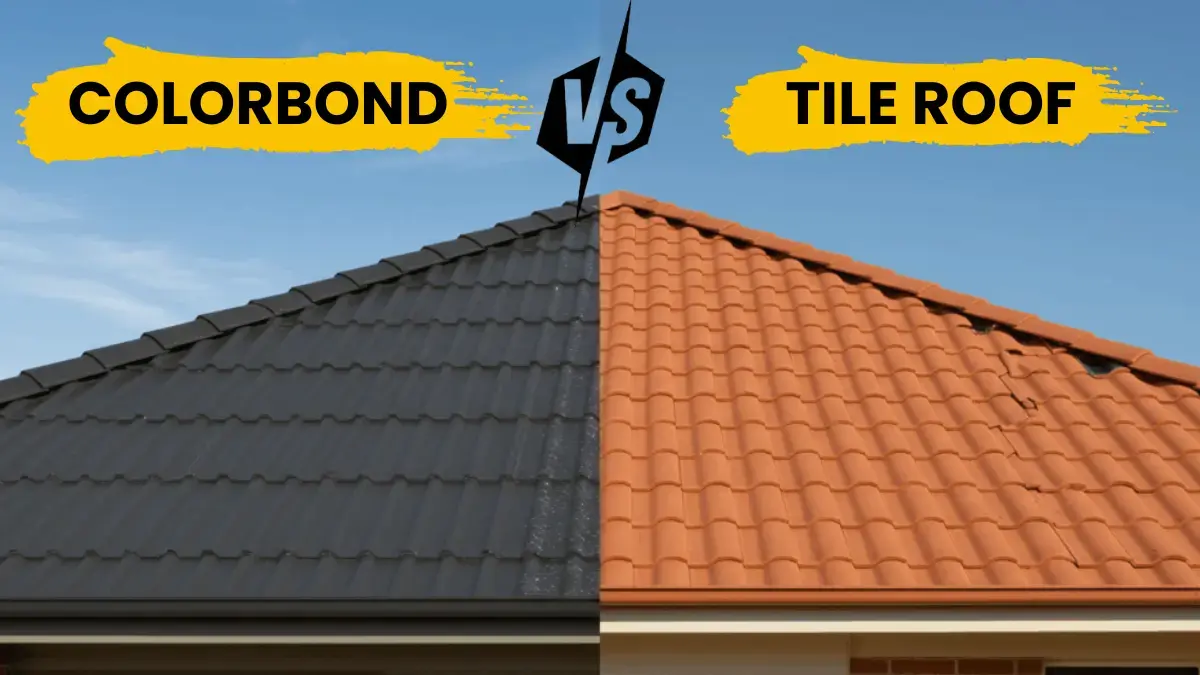
The roof is a practical and stylish feature of any home. Serving as the main barrier for your home, your roof protects your space from Australia’s changing weather and harsh, unpredictable conditions. Because of this, choosing the right roofing material becomes very important.
When you look at roofing options, the two most common options in Australia are roof tiles and Colorbond (steel) roofing.
In this guide, we’ll walk you through the pros and cons of choosing a tiled roof versus a Colorbond roof so you can understand which option is best for your home (and your budget).
What is Colorbond Roofing?
Colorbond® refers to a trusted brand of pre-painted steel roofing made by Bluescope Steel. This roofing uses premium-grade steel that is coated with a special paint layer that is baked at high heat. This process creates strong, weather-resistant panels that many homeowners and builders choose for their projects. Colorbond® Roofing offers long-lasting performance and a clean, modern look that suits a variety of building styles.
What are Roof Tiles?
Roof tiles have been protecting homes and buildings for hundreds of years. Manufacturers typically make these tiles from clay, concrete, or terracotta, and they come in many shapes, colors, and sizes. Roof tiles provide a durable roofing option that can handle harsh weather conditions such as strong winds, heavy rain, and sometimes hail, depending on the conditions. They are also fire resistant, making them a reliable choice in regions that face wildfire risks. Each tile fits neatly into the next, creating an interlocking system that keeps the roof watertight and protects the structure from moisture damage.
Colorbond Roofing Advantages & disadvantages
Advantages:
Lightweight
One of the most notable features of Colorbond is its light weight. It weighs about one-tenth the weight of regular roof tiles. This makes installation faster and more affordable. Unlike many other materials, Colorbond does not become heavy when wet. While other roofs absorb rainwater, the water simply drains off the Colorbond roof. This reduces the load on the roof frame, walls, foundation and your budget.
Weather-resistant
Colorbond roofs remain lightweight but still withstand strong winds and inclement weather. Unlike tiles, they put much less stress on the roof supports. They are also corrosion-resistant, making them ideal for homes near coastal areas.
Long-lasting
Metal roofs last for many years. Many older metal roofs are still going strong today. A well-installed Colorbond roof can last for decades, often 40 to 70 years.
Energy Efficient
Colourbond roofs use thermal technology to reflect heat. They reflect most of the heat trying to enter the home, which keeps the home cooler and helps the air conditioner run at a lower load. This reduces energy use.
Bushfire Safe
Colourbond is suitable for people living in bushfire-prone areas. Corrugated metal sheets do not burn and are easier to seal with embers and ash than concrete.
Next Read: Roof Repointing: What Is it, Process & How Much Does it Cost?
Disadvantages:
Repainting is necessary
You may need to repaint your roof every ten years. No material lasts forever, and because your roof is exposed to the elements year-round, it may need a new coat of paint along with a basic cleaning every decade.
It can be a little noisy
Rain can make a lot of noise on a steel roof. If you want to reduce the noise, you can add acoustical underlayment.
Roof cuts are required to install a central air conditioning system
If you are upgrading or installing a central AC system, you may need to cut sections of the roof. Since this is irreversible, plan carefully and consult with experts.
Colorbond vs Tiled Roofing – Comparison Box
| Feature | Colorbond Roofing | Tiled Roofing |
| Material Type | Coated steel metal sheets | Concrete or clay tiles |
| Average Lifespan | 30–45 years | Up to 50 years |
| New Roof Cost | Around $20,000 + GST | Around $25,000 + GST |
| Re-Roofing Cost | About $30,000 + GST | About $35,000 + GST |
| Cost per m² (Installation) | $50–$70 per m² | Concrete: $45–$65 per m²
Terracotta: $60–$80 per m² |
| Weight | Lightweight but strong | Heavier structure |
| Durability | Handles strong winds, non-combustible, termite resistant | Strong and long-lasting, but individual tiles may break |
| Maintenance | Low upkeep, resists rust, chipping, peeling | Occasional tile replacement may be needed |
| Best For | Modern homes, harsh weather, low maintenance | Traditional look, long lifespan, classic style |
Expert Painters For Your Home
Transform your home with the experts at Quest Paintings. Our team of Professional House Painters Balwyn specialise in house painting, interior painting and commercial painting. We provide a smooth, uniform finish that makes every space come alive and attractive. Every project is undertaken with care, professionalism and attention to detail. Stop worrying about paint jobs – let Quest Paintings bring colour and vibrancy to your walls.
Final Thoughts
When choosing a material to replace your roof, look at both the pros and cons of each option. Tile roofs remain popular due to their many strengths, but there are also a few other factors you should consider. Each type has its own advantages, so it’s important to do your own research with Quest Painting before deciding which roof style best suits your home’s needs.
Read More: How to Clean Stains on Walls Without Removing Paint (A Guide)

